Top-News
17.08.2026 18:13
Ukrainian farmers and grain exports hit hard by Russian blockade of Black Sea ports
17.08.2026 18:13
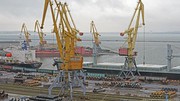
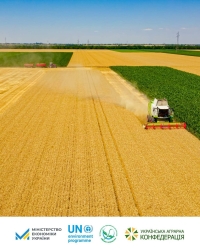
Ukraine is urgently seeking solutions as Russia’s blockade of Odesa ports chokes grain exports at the peak of the harvest, despite efforts to scale up alternative routes.
In the first 12 days of August, Ukraine exported only 590,000 tonnes of grain, about 30% of the needed volume, Agriculture Minister Taras Vysotskyi told journalists on Friday.
- Read more
- 298 reads
09.08.2026 15:55
Ukraine Is Already Part of Europe’s Agricultural Security Strategy. Is It Defining Its Own Role?
09.08.2026 15:55
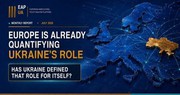
Europe is increasingly viewing Ukraine not simply as a major agricultural supplier, but as a strategic component of its future food and resource security. According to the European Commission, Ukraine’s accession could increase the EU’s protein self-sufficiency from 76% to 86%.
This figure goes far beyond a statistical projection. It is a clear indication that Ukraine’s agricultural potential is already being incorporated into European strategic thinking on food security, resource autonomy and resilient supply chains.
- Read more
- 248 reads
27.07.2026 22:49
Pavlo Koval: Nearly 90% of Ukraine's Agricultural Exports Depend on Maritime Shipping, While Alternative Routes Cannot Fully Compensate
27.07.2026 22:49
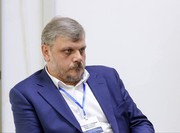
Russia's intensified attacks on Ukraine's port infrastructure and civilian vessels in the Black Sea have already had a significant impact on the country's agricultural export logistics. As security risks continue to escalate, foreign vessels have temporarily suspended calls at Ukrainian ports, creating serious challenges for the export of the new harvest.
Pavlo Koval, Director General of the Ukrainian Agribusiness Confederation (UAC), shared these assessments in an interview with Deutsche Welle.
- Read more
- 435 reads
23.07.2026 19:42
Even China Will Feel the Impact: Suspension of Ukrainian Grain Exports Threatens Global Food Security — Leonid Kozachenko
23.07.2026 19:42
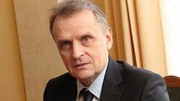
Even China Will Feel the Impact: Halt of Ukrainian Grain Exports Threatens Global Food Security, Says Leonid Kozachenko
For the sixth consecutive day, Ukraine has been unable to export agricultural products through its Black Sea ports.
- Read more
- 475 reads
05.07.2026 11:51
Pavlo Koval: Europe Is Shaping a New Agricultural Model, and Ukraine Must Be an Active Participant
05.07.2026 11:51
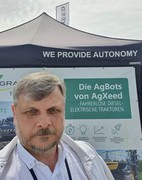
Pavlo Koval, Director General of the Ukrainian Agribusiness Club (UAC), spoke on Ukrainian Radio about Europe's largest Field Days near Magdeburg, the emergence of a new technological model for European agriculture, the future transformation of the EU's Common Agricultural Policy (CAP), and Ukraine's role in this process.
— You recently attended the Field Days in Germany. What made this event particularly significant?
These are the largest agricultural field demonstrations in Europe, held every two years, alternating between eastern and western Germany. This year's event took place near Magdeburg. For me, it was an opportunity to see firsthand how Europe is building a new model of agricultural production.
- Read more
- 507 reads
29.06.2026 14:52
Beyond Farm Support: How the New CAP Architecture Is Redefining European Agriculture and Ukraine's Role
29.06.2026 14:52
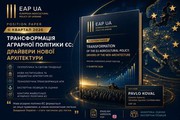
The European Union’s Common Agricultural Policy is entering a period of structural change. It is no longer only about farm income, market regulation or rural development. The emerging CAP is becoming part of a broader European agenda: food security, strategic autonomy, technological competitiveness, resource efficiency and economic resilience.
- Read more
- 433 reads
29.06.2026 08:30
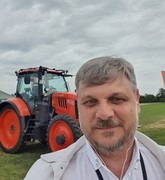
Pavlo Koval: Food Security Has Become an Integral Part of National and Global Security
29.06.2026 08:30
The war in Ukraine, the escalating conflict in the Middle East, and accelerating climate change are increasingly affecting global food security. Today's challenges demonstrate that the stability of the global food market depends not only on agricultural production but also on resilient logistics, reliable critical infrastructure, and effective international cooperation.
This was emphasized by Pavlo Koval, Director General of the Ukrainian Agrarian Confederation (UAC), commenting to GlobalWatch on the growing risks facing the global agricultural sector.
According to Koval, Russia's full-scale invasion of Ukraine marked a turning point for the global food supply system. The blockade of Ukraine's Black Sea ports in 2022 exposed the vulnerability of international food supply chains. The simultaneous surge in grain, energy, fertilizer, and transportation costs quickly affected markets across Europe, the Middle East, Africa, and Asia.
- Read more
- 465 reads
04.06.2026 12:51
WHO IS SHAPING THE AGRICULTURAL ECONOMY OF 2030
04.06.2026 12:51
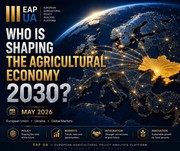
The developments of spring 2026 confirmed one of the central trends in global agricultural policy: leading economies increasingly view agriculture not only as a production sector, but also as a component of economic resilience, food security and strategic autonomy.
Global agricultural markets are entering a period in which competitiveness will be determined not only by production volumes or price, but also by the ability of states and companies to control supply chains, manage risks and ensure quality, traceability and export stability.
- Read more
- 1240 reads
23.05.2026 16:10
Sowing Campaign 2026: Weather Shifts, Labor Shortages and Initial Harvest Forecasts — Interview with Pavlo Koval
23.05.2026 16:10

Pavlo Koval, Director General of the Ukrainian Agrarian Confederation (UAC), provided an in-depth analysis of Ukraine’s spring sowing campaign during an interview on Ukrainian Radio. The discussion focused on the impact of abnormal weather conditions, the escalating labor shortage, and diverging forecasts for the upcoming harvest. Below is an extended summary of the key points from the interview.
— Mr. Koval, how have this spring’s weather conditions affected the sowing campaign schedule? How critical is the delay?
- Read more
- 818 reads
13.04.2026 17:57
Pavlo Koval: “Ukrainian agriculture is shifting from a volume-driven approach to margin-oriented production”
13.04.2026 17:57

The Director General of the Ukrainian Agrarian Confederation, Pavlo Koval, provided a detailed analysis of this year’s spring sowing campaign during a broadcast on Ukrainian Radio. He explained why farmers are being forced to reconsider crop structures, how global geopolitics is affecting production costs, and what transformations of the European market Ukrainian businesses should prepare for.
– Mr. Koval, the spring sowing campaign is already well underway. What are the key challenges farmers are facing, and how does this “fifth wartime sowing campaign” differ from the previous ones?
Pavlo Koval: More than one million hectares of early grains and legumes have already been sown, and some farms are beginning to plant sugar beet. However, this campaign will certainly not be cheaper or easier. There are several fundamental challenges common to all regions.
- Read more
- 798 reads
News
10.09.2026 15:22
31.08.2026 12:45
17.08.2026 18:13
10.08.2026 13:13
09.08.2026 15:55
05.08.2026 11:00
27.07.2026 22:49