15.02.2026 19:00
Pavlo Koval: “Pulses are the world’s pantry of plant protein — and Ukraine can become a pillar of Europe’s food security”

15.02.2026 19:00
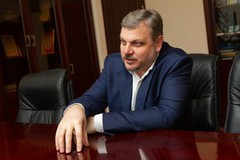
Global attention to pulses is growing rapidly — and for good reason. They combine food security, economic efficiency, and environmental sustainability. Speaking on the program “Today. Afternoon” on Ukrainian Radio, Pavlo Koval, Director General of the Ukrainian Agrarian Confederation (UAC), outlined the strategic importance of pulses for both Ukraine and the world.
The World’s Pantry of Plant ProteinPlant-based foods have historically formed the foundation of human nutrition. Among them, pulses stand out for their high nutritional value, significant fiber content, and rich plant-protein profile.
Today, global pulse production amounts to approximately 90 million tonnes annually. Leading producers include India, other Asian countries, the United States, and North Africa. Growth rates in acreage and total output of pulses are among the highest across all agricultural crops.
According to Pavlo Koval, the world is only now returning — at a scientific level — to an understanding long familiar to Ukrainian farmers 100–200 years ago: pulses are a strategic resource for food security.
Ukraine — Europe’s Leading Soybean ProducerUkraine has traditionally cultivated peas, lupine, beans, and fava beans. In recent decades, however, soybeans have played an especially significant role.
“We are the largest producer of soybeans in Europe. It sounds simple, but it is substantial,” Koval emphasizes.
Ukraine’s soybean production has reached up to 6 million tonnes. Despite some fluctuations in acreage, global soybean prices show an upward trend, maintaining the crop’s attractiveness for farmers.
This is further reinforced by the European Union’s strategy aimed at strengthening protein autonomy. The EU seeks to reduce its dependence on imported protein feedstocks, and Ukraine can become a key partner in this process — not only as a producer but also as a processor.
Ukrainian soybean meal meets European quality standards, and the country’s potential for deeper processing allows for greater domestic value added.
Ecosystem Role: Nitrogen, Soils, and Crop RotationPulses serve not only a food function but also an important environmental one. The Food and Agriculture Organization of the United Nations (FAO) identifies them as crops of sustainable development. Food and Agriculture Organization
The reason lies in their natural nitrogen-fixation mechanism. Root nodules formed by symbiotic bacteria capture nitrogen from the air and enrich the soil with plant-available forms of this essential nutrient. This reduces the need for mineral fertilizers and helps restore soil fertility.
Ukrainian agricultural tradition confirms this practice: winter wheat was historically sown after peas, benefiting from the natural predecessor effect.
“Nature has already created a regenerative ecosystem. We only need to use it properly — find the economic effect and integrate it into crop rotations,” Koval notes.
New Crops for New Climate ConditionsLentils and chickpeas are returning to Ukrainian fields. Chickpeas, in particular, have a lower transpiration coefficient — meaning they require less moisture — making them promising for southern regions.
In northern oblasts, lupine, vetch, alfalfa, and sweet clover are widely cultivated, primarily as forage crops. Alfalfa remains an indispensable perennial crop for silage and haylage production, supporting dairy productivity. Sweet clover is also valued as an important melliferous plant.
These crops perform a broad range of natural functions — from supporting biodiversity to strengthening the feed base of livestock production.
A Reserve for 9 Billion PeopleThe global population has already surpassed 8.3 billion and continues to grow. Projections suggest it may reach 9 billion in the coming decades.
“How will we feed them? Pulses hold a significant reserve,” stresses the UAC Director General.
Pulses combine affordable protein, long storage capacity, adaptability to diverse climatic conditions, and positive soil impact. They are becoming one of the key instruments of global food stability.
A Unified Agricultural EcosystemPulses are not a standalone segment but part of Ukraine’s integrated agricultural ecosystem — linking crop production, livestock, processing, and exports. This represents a forward-looking agricultural development model in which food security, sustainability, and economic efficiency operate together.
Ukraine has considerable potential to expand pulse production and deepen processing. The combination of natural resources, long-standing agricultural traditions, and modern technologies positions this sector as strategic for the economy, the environment, and international cooperation.
IC UAC according to The Ukrainian Radio
- 595 reads
News
20.10.2026 12:19
17.10.2026 22:10
09.10.2026 19:12
02.10.2026 23:51
29.09.2026 08:43
18.09.2026 10:33
10.09.2026 15:22
31.08.2026 12:45
17.08.2026 18:13
10.08.2026 13:13