World Agrinews
10.08.2026 13:13
Turkey Resumes Black Sea Ship Transits Via Straits After Delays
10.08.2026 13:13
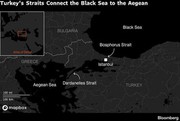
Turkey resumed allowing ships to transit its straits on the way to the Black Sea, following unexplained delays for some vessels amid heightened security risks in the area.
Crude oil tanker Aegean Dream entered the Dardanelles Strait on Sunday after waiting in the area since Thursday, and was signaling its destination as the Caspian Pipeline Consortium terminal in Russia’s Novorossiysk, according to ship tracking data. Container vessel Mehmet Kahveci A also passed through the waterway early Sunday signaling Novorossiysk.
- Read more
- 113 reads
15.06.2026 15:18
New corn gene has been discovered in China that could reduce the country’s dependence on soybean imports
15.06.2026 15:18

Chinese scientists have discovered a gene in wild corn responsible for increased grain protein content, which was lost during the domestication of the crop. According to the researchers, this discovery could help reduce China’s dependence on imported feed protein components, Yicai Global reports.
- Read more
- 270 reads
08.06.2026 15:21
Hot weather hurts Asian crops as powerful El Nino takes shape
08.06.2026 15:21

Dry weather is disrupting crop planting across Asia, raising concerns about food supplies in the world's most populous region, and an expected severe El Nino weather pattern could inflict more damage.
From India's grain-producing northwestern plains to Australia's eastern wheat belt, and from Thailand's rice fields to Indonesia's vast palm oil plantations, hot weather and below-normal rains are hurting crops and forcing farmers to reduce planting, farmers, analysts and traders said.
- Read more
- 326 reads
13.05.2026 17:28
Xi-Trump summit may yield farm deal, but China has limited soybean appetite
13.05.2026 17:28

Agriculture remains a less contentious area in U.S.-China relations. China unlikely to increase soybean purchases beyond existing commitments. Markets expect new deals for corn, sorghum, milling wheat, poultry and meat.
- Read more
- 318 reads
29.04.2026 13:24
South Africa may reach record canola production in 2026
29.04.2026 13:24

South Africa’s canola production is expected to continue expanding, with output in the 2026/27 season potentially reaching a new record. Farmers are increasing planted area in response to strong demand for vegetable oils and oilcake.
Planted area is projected at around 189.2 thousand hectares, up 8% year-on-year. If yields remain at the five-year average of 1.89 t/ha, total production could reach approximately 357.5 thousand tonnes, marking a 16% increase from the previous season.
- Read more
- 379 reads
24.04.2026 09:14
Pistachio Price Shock Spurs South Africa Farmers to Boost Output
24.04.2026 09:14

South African farming group Karoo Pistachios is ramping up output to capitalize on surging prices and compete with the world’s biggest producers.
The nuts — used in ice cream and chocolate — climbed to the highest level in almost a decade this month as the conflict in Iran, the world’s second-largest grower, disrupts supplies in an already constrained market.
- Read more
- 427 reads
09.04.2026 10:01
Stronger Chinese demand pushes up Ukrainian soybean prices
09.04.2026 10:01

Over the past week, Ukraine’s soybean market recorded moderate price growth, particularly in the western border segment. The key driver was stronger demand from China, along with low container freight rates, according to White Brokers.
This made container exports more attractive, which in turn supported prices. An additional factor was the return of other Asian importers to the market.
Prices for GMO soybeans on a DAP port basis were around $465/t, while at the western border, they were $1–2/t higher.
- Read more
- 409 reads
07.04.2026 08:50
Palm oil prices ended the Asian trading session lower on Monday
07.04.2026 08:50

Palm oil prices closed lower in the Asian trading session but remained elevated. Nomura analysts Raghavendra Diwekar and Amol Dongre wrote in a note that palm oil prices will likely be supported this week by a weaker ringgit and declining inventories in Malaysia. The average palm oil price this week could be around 4,700 ringgit, although a de-escalation of the Middle East conflict and lower oil prices could push them below 4,600 ringgit per tonne, the analysts believe.
- Read more
- 393 reads
02.04.2026 11:08
Global grain prices fall on expectations of de-escalation in the Middle East
02.04.2026 11:08
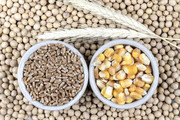
Grain prices in Chicago fell, leveling off earlier gains, amid optimism about a possible end to the war in the Middle East. This is reported by Bloomberg.
Oil prices – one of the key drivers of the grain and oilseed market in recent times – have also fallen in recent days. Brent futures fell below $ 100 a barrel on Wednesday after President Donald Trump said that the United States could withdraw from the conflict with Iran within weeks, although hostilities continue.
Wheat fell as much as 2.4% – this is the biggest drop in more than a week. Corn and soybeans also fell.
- Read more
- 320 reads
16.03.2026 17:18
Argentina actively exports sunflower seeds to the EU
16.03.2026 17:18

According to Oil World, in February, Argentina increased its sunseed exports compared to January from 113 to 216 thousand tons, in particular, deliveries to Bulgaria – from 0 to 121 thousand tons, Romania – from 33 to 73 thousand tons, Portugal – from 20 to 21 thousand tons.
- Read more
- 410 reads
News
17.08.2026 18:13
10.08.2026 13:13
09.08.2026 15:55
05.08.2026 11:00
27.07.2026 22:49
23.07.2026 19:42