The year 2025 for Ukraine's agricultural sector has become a year of resilience and adaptation to a new reality. Amidst war, logistical constraints, price pressure, and rising risks, farmers are forced to operate in an environment where economic efficiency takes center stage, and the room for margins is constantly narrowing.
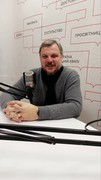
As Pavlo Koval, General Director of the Ukrainian Agrarian Confederation, emphasizes, these processes are characteristic not only of Ukraine. In major agricultural countries and key global agricultural markets, the influx of capital and tightening efficiency requirements are an evident trend.
The war remains one of the key factors of uncertainty. The enemy systematically strikes port infrastructure, energy, and logistical facilities. In recent months, the oil and fat complex has suffered significantly — the capacities of industry leaders have been damaged. Liquid cargo terminals in ports, which are the foundation of exports and foreign currency earnings, operate under constant threat, as do the people involved in these processes.
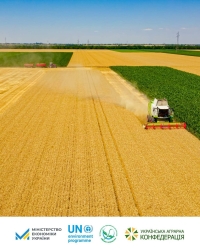
Despite this, the export potential of the agricultural sector in 2025 has been formed. In total, up to 80 million tons of grain and oilseed crops were harvested in Ukraine. About 3 million tons of corn remain in the fields, primarily in border regions — Sumy, Kharkiv, and Chernihiv oblasts. Naturally, questions will arise regarding its quality. A small share of late crops — buckwheat, millet, and in some places sunflower — also remained unharvested. Similar situations occurred before the war, as farmers' decisions are influenced not only by the security factor but also by the price situation.
The key task today is not to lose external markets. According to Pavlo Koval, in the event of their loss, regaining positions will be extremely difficult, especially considering the risk that these niches could be occupied by our enemy. In 2025, the agro-industrial complex provided up to 55% of Ukrainian exports. Every second dollar entering the country's economy has an agrarian origin. A single industry brought in over 22 billion dollars in foreign currency revenue — this is a strategic indicator.
At the same time, there are alarming signals: the agricultural sector ranks second in the number of bankrupt enterprises. In such conditions, risk assessment, strategic planning, and cost management become critically important. Logistics today can "eat up" the entire margin, so the adaptation of farmers is increasingly based on systemic solutions, as far as possible in wartime conditions.
Changes at the meta-level require special attention, primarily in the European Union. The established system of seven-year planning cycles of the EU Common Agricultural Policy (CAP) is undergoing a redesign right in the middle of the cycle. Environmental and climate approaches are being adjusted, in particular, the decision on deforestation of territories has been postponed. The driver of these changes was the economic efficiency of the farmer, as well as the growth of social tension in the agricultural environment.
Throughout 2025, farmer protests took place in a dozen EU countries. They signaled not emotions, but a systemic problem: the current model of agricultural policy ceases to work without corrections. In parallel, a discussion unfolded regarding budget cycles, asynchronous financing, and approaches to auditing the use of European funds.
For Ukraine, these processes are of fundamental importance. The country has the official status of a candidate for EU accession, and this vector remains unchanged. The optimal strategy is not to be an object, but a subject of the formation of common policies, a full-fledged participant in discussions on the future agricultural architecture of Europe.
"Europe does not end in Lublin — it ends in Luhansk," Pavlo Koval emphasizes. Ukraine is already a major agricultural player and an important part of global supply chains.
Thus, 2025 became a turning point not only for the Ukrainian agricultural sector but also for Europe as a whole. It is a year that clearly outlined the new agricultural reality without illusions and simplifications.
UAC Information Center based on materials from
Pavlo Koval’s interview with Ukrainian Radio, "Agrarian Digest" program with Oleksandr Kutsak (from the 13th minute)