News
23.01.2026 09:17
Wheat yield plateau linked to farming practices rather than climate — scientists
23.01.2026 09:17
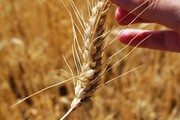
Scientists have found that the wheat yield plateau in northwestern Europe is driven primarily by agronomic management rather than climatic conditions. The findings come from a study by Wageningen University and Research, published in the scientific journal Nature Food.
- Read more
- 15 reads
18.01.2026 17:00
"Every Second Dollar in Ukraine’s Economy is Agrarian" — Pavlo Koval
18.01.2026 17:00

- Read more
- 63 reads
18.01.2026 14:56
Machine learning and AI the future of drought monitoring in Canada
18.01.2026 14:56
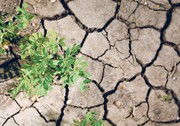
We are actively looking at new models and developing our own models to utilize some of the artificial intelligence and machine learning to really help us provide an initial look at drought across the country, pulling in the right indicators for the right regions and for the right time of year,” said Trevor Hadwen, agroclimate specialist with Agriculture Canada, who helps lead the drought monitor along with David Lee.
- Read more
- 51 reads
14.01.2026 11:45
Sunflower oil prices reach highest level since August 2022
14.01.2026 11:45

Russia is deliberately targeting Ukraine’s vegetable oil sector, carrying out systematic strikes on processing plants, ports, and infrastructure. Against this backdrop, vegetable oil prices have surged, with sunflower oil FOB six ports reaching their highest level since August 2022.
Over the past three weeks, there have been at least nine strikes on processing facilities and port infrastructure. According to market participants, about 25% of processing capacity is currently idle due to logistical disruptions, power supply problems, and security risks.
As of January 8, sunflower oil FOB six European ports — Rotterdam, Amsterdam, Antwerp, Ghent, Dunkirk, and Dieppe — rose to around $1,409 per ton for February shipments, up $80 per ton from mid-December levels. This is the highest price since August 2022.
- Read more
- 155 reads
12.01.2026 09:10
FAO presented a plan for the restoration of Ukraine’s agricultural sector for 2026–2028
12.01.2026 09:10

The Food and Agriculture Organization of the United Nations (FAO) has published a plan for emergency response and rapid recovery of Ukraine’s agricultural sector for 2026–2028.
The document identifies priority measures to protect rural income sources, restore production potential, and support the country’s agri-food sector.
Deputy Minister of Economy, Environment, and Agriculture Taras Vysotsky said that the war has seriously complicated the lives of Ukrainian farmers – from access to land and machinery to the ability to market their products. The agricultural sector remains critical for food security, employment, and economic stability.
- Read more
- 158 reads
10.01.2026 15:20
Oilseed processing in Ukraine has reached its peak in recent years due to export duties
10.01.2026 15:20

The introduction of export duties on soybeans and rapeseed has had a tangible effect: the utilization of processing capacities has increased to the maximum level in recent years. This is reported by the Ministry of Economy and Agriculture of Ukraine.
“In terms of stimulating processing, the effect is there – and it is measurable. Capacity utilization has increased, oilseed processing is currently at the maximum level in recent years. This indicates that the market has reacted exactly as was laid down in the logic of the norm,” said Oleksiy Sobolev, Minister of Economy, Environment and Agriculture of Ukraine.
According to him, the Ministry of Economy is building a policy where crops grown in Ukraine are more profitable to process domestically than to export raw materials and only then export processed products. This approach is aimed at moving away from the model of a raw material economy.
- Read more
- 119 reads
10.01.2026 14:58
Prices for Ukrainian corn continue increasing
10.01.2026 14:58
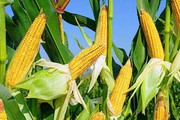
Аn upward price trend is being observed this week on Ukraine’s feed corn market.
Prices continue to be supported by limited selling activity from farmers, strong demand from traders, and corresponding trends on the export market.
Under the influence of these factors, bid prices for feed corn have increased by UAH 100-400 per ton since the start of the new year and, as of January 9, are reported in the range of UAH 8,300-9,900 per ton CPT. At the same time, the highest prices remain typical for southern Ukraine.
- Read more
- 139 reads
10.01.2026 14:09
Ukrainian sugar: Is there real export upside in 2025/26
10.01.2026 14:09

Sugarcane production and cane sugar content are affected not only by weather, but also by the increasingly influential cane sugar processing into ethanol. That makes sugar more volatile and more sensitive to every new forecast on cane yields, crushing pace, and the ethanol usage.
In the last few seasons, sugar prices flowed a downtrend with short, sharp rallies. Traders consider any forecast of production decline as a signal for price upward move, but the market is now getting a different story for the transition from 2024/25 to 2025/26 season with higher global output and a more comfortable balance.
The main drivers of the sugar market in 2025 were the forecasts of the deficit of sugar on the world market from ISO for one season 2024/25. Over the four updates of the forecast, significant changes have occurred – an increase in the production/consumption gap and a sharp reduction in the deficit indicator.
- Read more
- 130 reads
08.01.2026 16:41
French farmers block Paris streets in protest against Mercosur trade deal
08.01.2026 16:41

- Read more
- 104 reads
08.01.2026 11:24
China may temporarily lift duties on Canadian rapeseed meal and rapeseed oil
08.01.2026 11:24

Canadian Prime Minister Mark Carney is expected to visit China around January 13, amid discussions on a possible partial easing of mutual trade restrictions. As part of these talks, Canada may suspend its tariffs on Chinese electric vehicles for one year, a move seen as an attempt to de-escalate tensions in bilateral economic relations.
- Read more
- 146 reads
News
18.01.2026 17:00
18.01.2026 14:56
14.01.2026 11:45
12.01.2026 09:10
10.01.2026 15:20
10.01.2026 14:58
10.01.2026 14:09