18.01.2026 14:56
Machine learning and AI the future of drought monitoring in Canada

18.01.2026 14:56
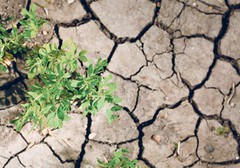
We are actively looking at new models and developing our own models to utilize some of the artificial intelligence and machine learning to really help us provide an initial look at drought across the country, pulling in the right indicators for the right regions and for the right time of year,” said Trevor Hadwen, agroclimate specialist with Agriculture Canada, who helps lead the drought monitor along with David Lee.
“Drought is different during spring versus summer versus fall. There’s so much data that we can have available to us, and so many different permutations of that. Machine learning and AI is an ideal source to look at for simplifying that for us, helping us be a little bit better and more accurate on those assessments.”
Why it Matters: With years of drought gripping certain parts of Canada, having the most accurate tools to predict it aids both in long- and short-term planning for farmers.
That information includes approximately 1,500 data points across the country that have climate stations.
The program is looking to transition to more gridded data by next spring, which will feature a specific value for 10-kilometre grids across the country.
“We always fight with what can we provide on the map of the entire country, how small can we get on that because some of our ag, in some data-rich areas, it is very nice,” Hadwen said.
“When we get up north, there’s not a whole lot of data. The gridded data set will solve some of this.”
The drought monitor’s origins started small in the Prairie region, focusing only on agriculture , before eventually reaching out to the entire country, excluding Nunavut and the Arctic.
It is a team effort — Agriculture Canada draws information from Environment Canada, climate and hydro-metric data from the provinces, Natural Resource Canada’s forest fire network, agriculture and water agencies and satellite-based vegetative health indexes.
“The final piece is a critical one,”Hadwen said.
“We can model drought all we want, but the piece that we really have difficulty finding is, how are the impacts? It can rain a lot in a certain area, but all that water rushes off and gets into the stream, and it doesn’t benefit the soil moisture very much, or at least not to depth.”
He said the monitor accesses agricultural producers at the ground level.
“When we’re looking at drought from an agricultural perspective, we need to know what those impacts are. We need to know where are there … problems, where the forages are having problems, where canola is having problems, where water supplies are an issue.”
There are a variety of types of drought in Canada that can affect regions differently.
For a region such as British Columbia, drought is not only soil moisture but stream flow and water availability with melts during the winter months.
This type of information can benefit producers.
A farmer from central Manitoba is quite aware of the drought they see before them, but knowing how their neighbours are doing can help them plan both in the short and long term.
“It’s not necessarily knowing where you’re at,” Hadwen said.
“It’s knowing where your neighbours are at or where your clients are at, the dealers that are looking at sending seed or chemicals or whatever else to that region. That’s information that helps them plan, knowing markets and where you’re at compared to the rest of Canada.”
A drought outlook map is built upon the monitor in one-month windows, he added, and also uses historic trends.
“Is drought really going to change? Is it going to improve?”
Agriculture tries to have its monthly drought monitor ready for agricultural producers and water resource managers by the 10th of every month.
Drought is looked at from a variety of angles: hydraulic, meteorological and environmental impacts on landscapes, and sustainability.
Hadwen said he and his team are proud of how much agricultural producers, policy makers, municipal planners and the media use the drought monitor.
“They utilize it in many different ways,” he said.
“They may not know how it’s produced for sure, but it’s how do we trust this thing? How accurate is it? What is it using?”
IC UAC according to producer
- 408 reads
News
10.09.2026 15:22
31.08.2026 12:45
17.08.2026 18:13
10.08.2026 13:13
09.08.2026 15:55
05.08.2026 11:00
27.07.2026 22:49