17.10.2026 22:10
Ukraine’s grain trap: where to put the 2026 harvest and what prolonged export restrictions could lead to
17.10.2026 22:10
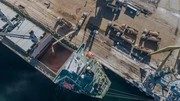
Ukraine is harvesting a decent grain crop, but selling it is becoming increasingly difficult due to Russian strikes on ports, railways, and other logistics routes. There is currently a high probability that the grain may remain in storage instead of generating funds for farmers for the next sowing campaign.
- Read more
- 351 reads
02.10.2026 23:51
Ukraine Must Help Shape the Next CAP
02.10.2026 23:51
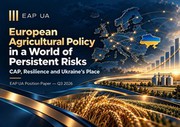
Ukraine’s agricultural integration into the European Union will depend on how both sides adapt to a changing Common Agricultural Policy (CAP). As Europe rethinks the financing of farm support and resilience, Ukraine needs a clear position on how its production capacity can contribute to a more secure European food system.
- Read more
- 274 reads
17.08.2026 18:13
Ukrainian farmers and grain exports hit hard by Russian blockade of Black Sea ports
17.08.2026 18:13
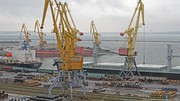
Ukraine is urgently seeking solutions as Russia’s blockade of Odesa ports chokes grain exports at the peak of the harvest, despite efforts to scale up alternative routes.
In the first 12 days of August, Ukraine exported only 590,000 tonnes of grain, about 30% of the needed volume, Agriculture Minister Taras Vysotskyi told journalists on Friday.
- Read more
- 595 reads
02.04.2026 11:18
When Information Becomes Infrastructure: Lessons from Ukraine’s Wartime Food System
02.04.2026 11:18
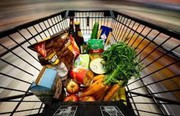
In a food-system crisis, delayed or contradictory information can be as disruptive as a blocked route. Ukraine’s experience shows why communication must be designed as part of policy itself.
A food crisis is also an information crisisWhen a port closes, the disruption is visible. When a rule changes without warning, or different authorities explain it differently, the damage is harder to see. Grain may be physically able to move, yet a trader cannot price the risk, a haulier cannot confirm which procedure applies and a producer cannot decide whether to sell or store. In a crisis, information is not merely commentary on the supply chain; it is part of its operating infrastructure.
- Read more
- 627 reads
03.03.2026 15:40
Beyond Emergency Corridors: Building Resilience in Ukraine’s Grain Supply Chain
03.03.2026 15:40

Ukraine kept grain moving under extraordinary pressure. The next task is to turn wartime improvisation into a durable, coordinated system for Ukraine and Europe.
A global supply chain under pressureBefore Russia’s full-scale invasion, Ukraine played a central role in global food security. It was one of the world’s leading suppliers of wheat, maize, barley and sunflower oil, serving markets across Europe, the Middle East, North Africa and Asia. The system was highly efficient, but also highly concentrated: the European Commission estimated that up to 95 per cent of Ukraine’s grain exports moved through Black Sea ports.
- Read more
- 686 reads
09.08.2026 15:55
Ukraine Is Already Part of Europe’s Agricultural Security Strategy. Is It Defining Its Own Role?
09.08.2026 15:55

Europe is increasingly viewing Ukraine not simply as a major agricultural supplier, but as a strategic component of its future food and resource security. According to the European Commission, Ukraine’s accession could increase the EU’s protein self-sufficiency from 76% to 86%.
This figure goes far beyond a statistical projection. It is a clear indication that Ukraine’s agricultural potential is already being incorporated into European strategic thinking on food security, resource autonomy and resilient supply chains.
- Read more
- 449 reads
27.07.2026 22:49
Pavlo Koval: Nearly 90% of Ukraine's Agricultural Exports Depend on Maritime Shipping, While Alternative Routes Cannot Fully Compensate
27.07.2026 22:49

Russia's intensified attacks on Ukraine's port infrastructure and civilian vessels in the Black Sea have already had a significant impact on the country's agricultural export logistics. As security risks continue to escalate, foreign vessels have temporarily suspended calls at Ukrainian ports, creating serious challenges for the export of the new harvest.
Pavlo Koval, Director General of the Ukrainian Agribusiness Confederation (UAC), shared these assessments in an interview with Deutsche Welle.
- Read more
- 674 reads
23.07.2026 19:42
Even China Will Feel the Impact: Suspension of Ukrainian Grain Exports Threatens Global Food Security — Leonid Kozachenko
23.07.2026 19:42

Even China Will Feel the Impact: Halt of Ukrainian Grain Exports Threatens Global Food Security, Says Leonid Kozachenko
For the sixth consecutive day, Ukraine has been unable to export agricultural products through its Black Sea ports.
- Read more
- 699 reads
05.07.2026 11:51
Pavlo Koval: Europe Is Shaping a New Agricultural Model, and Ukraine Must Be an Active Participant
05.07.2026 11:51

Pavlo Koval, Director General of the Ukrainian Agribusiness Club (UAC), spoke on Ukrainian Radio about Europe's largest Field Days near Magdeburg, the emergence of a new technological model for European agriculture, the future transformation of the EU's Common Agricultural Policy (CAP), and Ukraine's role in this process.
— You recently attended the Field Days in Germany. What made this event particularly significant?
These are the largest agricultural field demonstrations in Europe, held every two years, alternating between eastern and western Germany. This year's event took place near Magdeburg. For me, it was an opportunity to see firsthand how Europe is building a new model of agricultural production.
- Read more
- 704 reads
29.06.2026 14:52
Beyond Farm Support: How the New CAP Architecture Is Redefining European Agriculture and Ukraine's Role
29.06.2026 14:52
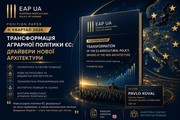
The European Union’s Common Agricultural Policy is entering a period of structural change. It is no longer only about farm income, market regulation or rural development. The emerging CAP is becoming part of a broader European agenda: food security, strategic autonomy, technological competitiveness, resource efficiency and economic resilience.
- Read more
- 660 reads
News
05.11.2026 09:21
03.11.2026 08:53
20.10.2026 12:19
17.10.2026 22:10
09.10.2026 19:12
02.10.2026 23:51
29.09.2026 08:43
18.09.2026 10:33
10.09.2026 15:22