09.08.2026 15:55
Ukraine Is Already Part of Europe’s Agricultural Security Strategy. Is It Defining Its Own Role?

09.08.2026 15:55
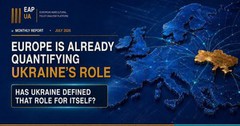
Europe is increasingly viewing Ukraine not simply as a major agricultural supplier, but as a strategic component of its future food and resource security. According to the European Commission, Ukraine’s accession could increase the EU’s protein self-sufficiency from 76% to 86%.
This figure goes far beyond a statistical projection. It is a clear indication that Ukraine’s agricultural potential is already being incorporated into European strategic thinking on food security, resource autonomy and resilient supply chains.
Yet Ukraine’s ability to deliver on this potential remains highly vulnerable. Continued Russian attacks on port infrastructure are once again exposing the fragility of the country’s export capacity. In the event of major disruption, monthly grain exports could fall from approximately 6 million tonnes to just 1.5–2 million tonnes that could be redirected through alternative routes.
This creates a strategic paradox: Europe’s need for Ukrainian agricultural resources is growing precisely as Ukraine’s ability to produce, store, transport and export them reliably is coming under increasing pressure.
These developments are at the centre of the new EAP UA monthly report, “Monitoring EU and Ukrainian Agricultural Policy. July 2026.”
The report goes beyond a review of July’s policy decisions and regulatory developments. It identifies the broader trends reshaping the European agricultural system and assesses what they mean for Ukraine.
Among the key issues examined are:
- the EU’s transformation of strategic autonomy into a practical policy framework covering protein crops, feed, livestock, fertilisers, crisis financing and supply-chain resilience;
- the significance of €540 million in emergency support for European farmers and new contractual rules that point to a changing logic of the Common Agricultural Policy;
- emerging opportunities for Ukraine in European protein, feed, processing and bioenergy value chains;
- the restoration of Ukraine’s Ministry of Agrarian Policy and the institutional capacities it will need to develop;
- the growing challenge of converting physical agricultural output into liquidity for producers amid logistical and market disruptions;
- three scenarios for August–October and the decisions Ukraine should prepare to take within the next 30, 90 and 180 days.
The report is designed as a practical decision-making tool.
For businesses, it identifies emerging regulatory requirements, market risks and investment opportunities. For policymakers, it outlines the strategic issues Ukraine should begin addressing in its negotiations with European partners. For industry associations and international stakeholders, it provides a framework for understanding how Ukraine’s position within the European agri-food system is evolving.
Ukraine already possesses the agricultural scale and productive potential that Europe increasingly needs. The strategic challenge now is to translate that potential into greater value added, stronger negotiating leverage and a long-term role in Europe’s emerging agricultural security architecture.
The key question is therefore no longer whether Ukraine will be important to Europe’s agricultural security.
It is whether Ukraine will remain primarily a supplier of agricultural resources — or become a co-architect of Europe’s agricultural security system.
The full report is attached.
EAP UA (Pavlo Koval) | Republished by: UAC
| Attachment | Size |
|---|---|
| eu_ua_en_july_2026.pdf | 1.13 MB |
- 284 reads
News
18.09.2026 10:33
10.09.2026 15:22
31.08.2026 12:45
17.08.2026 18:13
10.08.2026 13:13
09.08.2026 15:55
05.08.2026 11:00
27.07.2026 22:49