05.07.2026 11:51
Pavlo Koval: Europe Is Shaping a New Agricultural Model, and Ukraine Must Be an Active Participant

05.07.2026 11:51
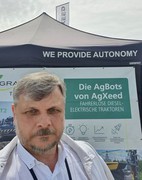
Pavlo Koval, Director General of the Ukrainian Agribusiness Club (UAC), spoke on Ukrainian Radio about Europe's largest Field Days near Magdeburg, the emergence of a new technological model for European agriculture, the future transformation of the EU's Common Agricultural Policy (CAP), and Ukraine's role in this process.
— You recently attended the Field Days in Germany. What made this event particularly significant?
These are the largest agricultural field demonstrations in Europe, held every two years, alternating between eastern and western Germany. This year's event took place near Magdeburg. For me, it was an opportunity to see firsthand how Europe is building a new model of agricultural production.
We often discuss the transformation of the EU's Common Agricultural Policy—from changes in budgetary architecture to practical technological solutions implemented directly in the field. At the Field Days, this transformation was clearly visible. Modern agriculture is becoming inseparable from digitalisation, robotics, artificial intelligence, data analytics, the Internet of Things, and autonomous machinery.
— So this is about much more than simply adopting new technologies?
Exactly. Technology is no longer a matter of innovation for its own sake. It is a response to profound economic challenges facing agriculture.
Today, every gram of fertilizer, every milligram of crop protection product, and every single seed must be managed with maximum precision. Even when farmers achieve strong yields, logistics and infrastructure costs can easily eliminate profitability. This challenge applies equally to both European and Ukrainian producers.
European farmers increasingly view technological innovation not as a trend, but as an economic necessity.
— How does this relate to the future of the Common Agricultural Policy?
For the first time since the CAP was established in 1962, it is increasingly likely that the next EU Multiannual Financial Framework will no longer contain a separate protected budget line dedicated exclusively to agricultural policy. Instead, support for agriculture within the proposed 2028–2034 EU budget is expected to be integrated into a broader range of horizontal funding instruments.
This is highly significant for Ukraine. As an EU candidate country that has already opened the first negotiation cluster, Ukraine must closely monitor how European agricultural policy is evolving. Agriculture has traditionally been among the most challenging chapters in every EU enlargement process, and Ukraine will be no exception.
— Which issues are likely to become the most challenging during negotiations?
One of the key topics discussed in Germany concerned restrictions on plant protection products and how Ukraine will align with EU regulations during accession. The message from European partners was quite clear: there will be very limited flexibility for Ukraine. This issue is not only about food safety and environmental standards—it is also about competitiveness.
European family farms already operate under strict regulatory constraints. They understand that Ukraine's larger production scale already provides a competitive advantage. If Ukrainian producers were granted additional regulatory exemptions, farmers in countries such as Poland, France, Italy, or Sweden could find themselves at a competitive disadvantage. Naturally, they will defend their interests.
Ukraine will also defend its own interests—but through constructive dialogue and transparent negotiations. Our position is that transitional periods following accession will be essential, particularly in areas such as phytosanitary regulations, veterinary standards, and agricultural compliance.
Many EU standards have already been introduced in Ukraine, including animal welfare requirements and veterinary regulations. Similar transition mechanisms will likely apply to phytosanitary legislation.
— What lessons did you draw from conversations with European farmers?
We visited several farming enterprises, including a family farm in eastern Germany cultivating approximately 1,600 hectares. The farmer explained that banning certain highly effective crop protection products sometimes leads to unintended environmental consequences. Instead of applying one effective product, farmers may need to use two or three alternatives or increase the number of field operations. That means more machinery passes, greater soil compaction, and additional fuel consumption. This is precisely why digital technologies are becoming indispensable. Some tasks that previously required conventional sprayers can increasingly be performed by drones. While engineers and agronomists continue refining these technologies, the direction of development is already irreversible.
— Does this reflect a broader political shift within Europe?
Absolutely. France has recently adopted legislation focused on agricultural autonomy and food sovereignty—a significant political signal from one of Europe's largest agricultural producers.
More broadly, Europe is establishing new funding instruments and policy frameworks in response to growing geopolitical and security challenges, including the war on the European continent.
The Common Agricultural Policy is gradually becoming less of a standalone policy and increasingly integrated with industrial, security, trade, innovation, and technology policies.
— How does Ukraine fit into this transformation?
I believe Europe is actively developing a new conceptual model for Ukraine's future accession. Such a model simply did not exist before. The traditional enlargement framework used for countries such as Estonia, Poland, Romania, Bulgaria, or Cyprus cannot simply be replicated in Ukraine's case. Ukraine is unique—not only because of the scale of its agricultural sector, but also because of its resilience under wartime conditions. European partners are carefully studying Ukraine's experience in maintaining food supply chains during a full-scale war. Several international research initiatives are already examining how Ukrainian agri-food systems function under extreme crisis conditions.
— What role will artificial intelligence play in this new agricultural model?
Artificial intelligence has become one of the world's fastest-growing investment areas. Humanity has never witnessed investment in technological infrastructure on this scale. Approximately one trillion US dollars has been invested in AI data centres over the past six years alone. While parts of this market may eventually undergo correction, AI itself is clearly here to stay. Agriculture is already demonstrating practical applications.
Companies are developing autonomous field systems powered by AI. Drones can survey crops, analyse plant conditions, transmit data to precision sprayers, and enable targeted treatment of individual weeds rather than entire fields. These technologies are already operational, although they continue to evolve.
— Can Ukraine become one of the leaders in this transformation?
Ukraine is already an active participant in shaping the next generation of agricultural production. Although many of today's innovations are driven by wartime necessity, after victory these technologies will increasingly move from the battlefield to farms and fields. History repeatedly demonstrates that periods of crisis accelerate innovation.
Today we see rapid advances in autonomous machinery, electric agricultural equipment, renewable energy systems, precision farming, and digital agriculture. These technologies will define the future competitiveness of agricultural production.
— Does this mean the European Green Deal is being reconsidered?
Europe is not abandoning its climate ambitions, but it is reassessing certain implementation mechanisms. The Green Deal is no longer viewed as untouchable.
For example, France has questioned whether combining the Carbon Border Adjustment Mechanism (CBAM) with rising energy prices and geopolitical instability risks undermining European agricultural competitiveness. Although the European Commission has so far maintained its position, discussions continue across Europe on how climate policies can better balance sustainability with competitiveness.
— Why is Ukraine strategically important for Europe's agricultural future?
Global agricultural competition is intensifying. Brazil, for example, has become a major global agricultural powerhouse. Ukraine is Europe's largest soybean producer, with annual production reaching around six million tonnes at its peak. Brazil, by comparison, produces approximately 146 million tonnes. Europe understands that maintaining global competitiveness will be difficult without Ukraine. The challenge is therefore not simply integrating Ukraine into the European Union.
The real task is integrating Ukraine intelligently—embedding Ukrainian agriculture into European policies, value chains, innovation ecosystems, and long-term food security strategies. Only through such integration can Europe strengthen both its agricultural competitiveness and its strategic resilience.
IC UAC according to The Ukrainian Radio (listen from 20:50 min.)
- 575 reads
News
02.10.2026 23:51
29.09.2026 08:43
18.09.2026 10:33
10.09.2026 15:22
31.08.2026 12:45
17.08.2026 18:13
10.08.2026 13:13
09.08.2026 15:55
05.08.2026 11:00