16.11.2026 08:51
War leaves Russian farmers paying more to sell grain for less

16.11.2026 08:51
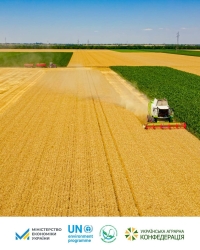
The Director General of the Ukrainian Agrarian Confederation, Pavlo Koval, commented on the situation in Russia’s grain market, where disruptions to export logistics, damage to port infrastructure, and rising costs have forced farmers to sell grain below production costs. He explained how logistical constraints are affecting production profitability, export opportunities, and prospects for the next harvest.Grain prices in southern Russia have halved while costs climb, leaving farmers short heading into next season.
A farmer in southern Russia who brought in a strong harvest this year now earns half of what the same grain fetched a few months ago. A ton sells for 4,000 to 5,000 rubles ($47 to $58), Izvestia reported. Many farmers are selling below what it cost to grow the crop.
The fields delivered. Russia's Ministry of Economic Development expects a harvest of about 140 million tons, according to Vedomosti. The buyers are out of reach. Since July 10, Ukrainian drone strikes have shut several grain and oil terminals on the Sea of Azov and the Black Sea. That route carries more than 85% of Russia's grain and sunflower oil exports.
Vladimir Petrichenko, general director of the analytics company ProZerno, estimated that up to 20 million tons of grain will have no buyers. That is about one-sixth of the crop harvested by mid-September. "That's not a misfortune. It’s a catastrophe," he said, as quoted by The Moscow Times.
The ministry planned to export 59 million tons. If the southern ports stay idle, only two-thirds of that will ship. ProZerno expects up to 34.8 million tons of unsold grain by year's end, still in storage when the next harvest arrives nine months later.
Selling below costAlisher Ilkhamov, director of the London-based Central Asia Due Diligence, told Kontur that Russian grain exports this year have fallen to one-fourth of last year’s level, citing some data. As demand tumbled, farmers had to sell at prices that fail to cover production costs, let alone lost profits.
Moscow has offered limited relief. In September, the government suspended grain export duties through December 31, Interfax reported. In early October, rising shipments through the Baltic halted the slide in domestic prices, analysts told Reuters. Prices remain far below last year's.
Pavlo Koval, director general of the Ukrainian Agrarian Confederation, told Kontur that a bumper crop can now go hand in hand with a profitability crisis. Grain becomes income only when it reaches buyers on time at a price that covers expenses, he said, and the war has broken that link.
"The increase in military risks, damage to infrastructure and disruption of trade routes have become the economic consequences of this aggression, and they also affect Russian producers and international buyers," Koval said.
The cost of going northThe government is trying to move grain through Baltic and Arctic ports, including Murmansk, and through the Caspian and the Far East. Each detour adds to the farmer’s bill.
"In the peak season, from July to September, the 'alternative' northern ports of Ust-Luga, Vysotsk and Murmansk could ship only around 1.3 million tons total of grain and oils. During that period the southern ports process around 12 million tons," political analyst Anvar Nazirov told Kontur.
Nazirov said rerouting drastically cuts trade margins. Most Russian grain grows in the south, far from the Leningrad and Murmansk regions. Cargoes bound for Egypt, Algeria or Tunisia must now circle Europe. Without massive state subsidies, North Africa and key Middle Eastern markets could lose Russian deliveries. He added that climate change is making winter navigation at the northern ports harder, raising costs and slowing deliveries.
Nikolai Lychev, managing partner of Agrotrend.ru, told RBC that shipping grain from southern Russia through the Baltic costs $40-$50 more per ton than shipping it from Novorossiysk.
"In a best-case scenario, this allows farmers to cover their production costs, but it won’t result in profits. On top of that, these ports, especially Ust-Luga and the Caspian ports, have themselves come under Ukrainian strikes, and those strikes will intensify," Ilkhamov said.
"But a port is only the final link in a long chain. To compensate for the loss of the southern routes, you need to coordinate the operation of the railway, trucks, unloading stations, warehouses and loading equipment," Koval said.
Someone has to absorb the extra expense, Koval said: farmers through lower purchase prices, exporters through thinner margins or the state through subsidies. Some deals will lose their economic rationale. If the state pays the difference, grain will still ship, and the real cost to the economy will rise.
Fuel, debt and next yearStrikes on refineries made fuel for fieldwork scarcer and more expensive through the harvest, and tensions in the Persian Gulf strained the fuel market further. Russia banned diesel exports over the summer to protect domestic supply. It partially lifted the ban in October after a deal with the United States. Farmers have been paying for the global energy crisis and for broken export routes at once. A strong harvest may hide how much worse off they are.
"When grain sits in the warehouse, the producer still needs to pay salaries and pay for fuel, repairs, seeds, fertilizer and debt servicing," Koval said. Farms short of cash cut investment and postpone equipment upgrades. Over time, total yields can fall noticeably while official statistics still show prosperity.
The damage will be uneven. Northern routes may work for some regions and cost too much for others, which could change what farmers plant and where export crops are grown. Large companies with storage and financing can wait out the crisis. Small farms often must sell when they urgently need money. If the restrictions persist, debt will rise and assets will concentrate in fewer hands.
"Russia risks losing some of its buyers for longer than it takes to rebuild the infrastructure," Koval said. Other exporters may take over some deliveries. Ukraine could benefit, if it has stable logistics, financing and reliable contracts, he added. Rising fuel and transport costs are squeezing Ukrainian producers too.
Russia can adapt its export logistics, Koval said. The open questions are what it will cost, who will pay and whether producers will have enough left for the next harvest. He said lasting stability in agricultural trade requires an end to Russia's aggression and safe navigation, and that responsibility for the risks lies with the state that started the war.
ІЦ УАК за матеріалами konturnovosti
- 23 reads
News
16.11.2026 08:51
05.11.2026 09:21
03.11.2026 08:53
20.10.2026 12:19
17.10.2026 22:10
09.10.2026 19:12
02.10.2026 23:51
29.09.2026 08:43
18.09.2026 10:33