15.06.2026 15:18
New corn gene has been discovered in China that could reduce the country’s dependence on soybean imports

15.06.2026 15:18
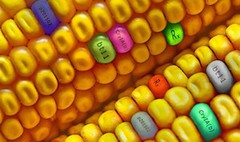
Chinese scientists have discovered a gene in wild corn responsible for increased grain protein content, which was lost during the domestication of the crop. According to the researchers, this discovery could help reduce China’s dependence on imported feed protein components, Yicai Global reports.
A research team led by Wu Yunrui and Wang Haihai from the Center for Advanced Research in Plant Molecular Sciences of the Chinese Academy of Sciences identified and cloned the THP3-T gene from teosinte, a wild ancestor of modern corn. The results of the study were published on June 3 in the scientific journal Nature.
Corn is a key component of livestock and poultry feed due to its high energy value. However, the relatively low protein content of corn grain forces feed producers to use imported soybean meal to balance protein intake in rations. China’s annual corn production is approximately 300 million tons, but the protein content of the crop remains a key constraint for the feed industry.
The new THP3-T gene works in conjunction with another high-protein gene, THP9-T, which Chinese scientists discovered in 2022. After introducing both genes into commercial corn hybrids, grain protein content was increased from 8.5% to 12-13% without reducing yield.
The research team estimates that increasing corn protein content by four percentage points will allow for an annual additional protein yield equivalent to approximately 30 million tons of imported soybeans.
The scientists are currently collaborating with breeding companies and aim to further increase the protein content of hybrid corn to 15%, which could significantly strengthen the raw material independence of the Chinese feed industry.
IC UAC according to ukragroconsult
- 422 reads
News
09.10.2026 19:12
02.10.2026 23:51
29.09.2026 08:43
18.09.2026 10:33
10.09.2026 15:22
31.08.2026 12:45
17.08.2026 18:13
10.08.2026 13:13
09.08.2026 15:55
05.08.2026 11:00