News
03.03.2026 15:40
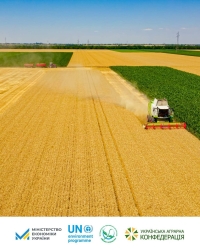
Beyond Emergency Corridors: Building Resilience in Ukraine’s Grain Supply Chain
03.03.2026 15:40

Ukraine kept grain moving under extraordinary pressure. The next task is to turn wartime improvisation into a durable, coordinated system for Ukraine and Europe.
A global supply chain under pressureBefore Russia’s full-scale invasion, Ukraine played a central role in global food security. It was one of the world’s leading suppliers of wheat, maize, barley and sunflower oil, serving markets across Europe, the Middle East, North Africa and Asia. The system was highly efficient, but also highly concentrated: the European Commission estimated that up to 95 per cent of Ukraine’s grain exports moved through Black Sea ports.
- Read more
- 603 reads
03.03.2026 14:27
EU Agricultural Policy Enters a Phase of Strategic Recalibration — and Ukraine Must Negotiate in Motion
03.03.2026 14:27
February 2026 did not deliver a headline regulatory shock in Brussels. It delivered something more consequential for the medium term — a visible change in how the EU is thinking about agriculture itself. The Common Agricultural Policy (CAP) is no longer being treated primarily as a stable, self-contained support system. It is increasingly being handled as part of a wider political equation that includes budget pressure, social sensitivity, strategic autonomy, and enlargement.
- Read more
- 621 reads
28.02.2026 09:26
EU Common Agricultural Policy 2028-2034: Structural Reconfiguration and Implications for Ukraine
28.02.2026 09:26
Opinion 05/2026 published by the European Court of Auditors (ECA) does not amend current legislation and does not redefine the Common Agricultural Policy (CAP). However, its substance signals a moment of structural tension in the proposed CAP architecture for the 2028-2034 period. The ECA warns that the proposed model may result in a complex CAP legal architecture and complicated planning arrangements, potentially affecting predictability, implementation timelines, and certainty for beneficiaries.
- Read more
- 561 reads
27.02.2026 19:19
US to raise tariffs to 15% or higher on selected countries
27.02.2026 19:19

The United States plans to increase import tariffs for certain countries to 15% or higher, according to U.S. Trade Representative Jamieson Greer. Speaking to FOX Business, Greer indicated that while a 10% baseline tariff is currently in place, duties for some trading partners will soon rise to 15%, with the possibility of even higher rates for others.
- Read more
- 325 reads
23.02.2026 22:23
Russian forces strike chocolate factory in Sumy region already damaged in 2022
23.02.2026 22:23
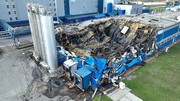
Russian troops launched a missile attack on the Mondelēz chocolate factory in Trostianets, Sumy region. The ballistic missile hit one of the plant’s production buildings, Foreign Minister Andrii Sybiha reported.
“Russia has struck another American business in Ukraine — the civilian manufacturing facility of Mondelēz in Trostianets, one of the first major U.S. investments in Ukraine’s independent economy,” the statement said.
According to preliminary information, there were no casualties.
- Read more
- 395 reads
18.02.2026 10:53
US soybean processing volume hits record high
18.02.2026 10:53

According to monthly data from the National Oilseed Processors Association (NOPA) released Tuesday, U.S. soybean crushing volume in January reached a record high for the first month of the year, and soybean oil stocks rose to their highest level since April 2023.
- Read more
- 413 reads
15.02.2026 19:00
Pavlo Koval: “Pulses are the world’s pantry of plant protein — and Ukraine can become a pillar of Europe’s food security”
15.02.2026 19:00
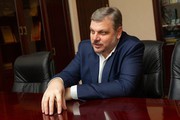
Global attention to pulses is growing rapidly — and for good reason. They combine food security, economic efficiency, and environmental sustainability. Speaking on the program “Today. Afternoon” on Ukrainian Radio, Pavlo Koval, Director General of the Ukrainian Agrarian Confederation (UAC), outlined the strategic importance of pulses for both Ukraine and the world.
- Read more
- 543 reads
11.02.2026 17:26
Brussels Steps Back, Capitals Step Up: The New "Safety-First" Reality of EU Agri-Policy in 2026
11.02.2026 17:26

January 2026 in European agricultural policy was not marked by grand strategies or visionary reforms. Instead, it was the month of a "hard collision" between expectations and reality. The key takeaway from the start of the year is unambiguous: the center of gravity in decision-making has shifted from the supranational level of the European Commission to the national capitals of Member States. For the EU, this is an era of caution; for Ukraine, it is a signal that the rules of engagement have fundamentally changed.
- Read more
- 467 reads
11.02.2026 12:00
Increasing agricultural exports to $100 bln requires attracting $85 bln in investments over 10 years – Kozachenko
11.02.2026 12:00

Ukraine can increase annual agricultural exports from $24.2 billion to over $100 billion by switching from exporting raw materials to increasing the production of deep-processed products, which requires $85 billion in investments, said president of the Ukrainian Agrarian Confederation (UAC), Leonid Kozachenko.
- Read more
- 186 reads
09.02.2026 16:05
Leonid Kozachenko: Ukraine will maintain its role in global vegetable oil production
09.02.2026 16:05

President of the Ukrainian Agrarian Confederation Leonid Kozachenko, speaking on Suspilne News, commented on the situation in the vegetable oil market, price prospects, energy challenges for producers, and Ukraine’s role in ensuring global food security.
- Read more
- 565 reads
News
10.09.2026 15:22
31.08.2026 12:45
17.08.2026 18:13
10.08.2026 13:13
09.08.2026 15:55
05.08.2026 11:00
27.07.2026 22:49