30.03.2026 09:58
“We are integrating into an EU that is itself changing”: Pavlo Koval on risks, the sowing campaign, and the role of AI in agriculture

30.03.2026 09:58
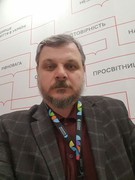
Director General of the Ukrainian Agrarian Confederation Pavlo Koval, speaking on Ukrainian Radio, provided a comprehensive analysis of the key challenges currently facing Ukrainian farmers. In an in-depth discussion, he outlined the hidden complexities of European integration, explained the impact of the Middle East crisis on the cost of the sowing campaign in Ukraine, and emphasized the critical importance of implementing artificial intelligence to address the labor shortage.
Mr. Koval, European integration is widely seen as a non-alternative path. However, the process is proving to be complex and challenging. What should the Ukrainian agricultural sector prepare for, and what are the key pitfalls along this path?
Pavlo Koval: The main challenge is that we are integrating not into a stable and well-established system, but into one that is currently undergoing significant transformation. The EU’s Common Agricultural Policy (CAP) is set to change from 2027. If we look at European agendas today, agricultural policy is no longer among the top five priorities. Security and the development of European defense capabilities have taken the lead, and these require substantial budget reallocations.
Until recently, the EU’s agricultural support budget was untouchable: in recent years, around 40% of total EU spending was allocated to it, and in the 1980s it reached up to 70%. Today, however, there is open discussion about restructuring the CAP itself — including potentially moving away from the two-pillar income support model, while rural development may be integrated into broader national social programs.
For Ukraine, this means one thing: we must not merely observe but actively adapt these processes to our own reality. As a candidate country, we need to engage in these discussions and transformations. We must clearly understand our position — where we may lose, where we may gain, and where we can even contribute to the EU. European regulatory standards are already de facto entering Ukraine. If our farmers want to operate on the EU market, they must comply with these stringent requirements today. Business dynamics are outpacing formal negotiations, so we need a clear strategy on how to use transition periods and protect the competitiveness of domestic producers, ensuring we do not become merely a raw material supplier.
The fertilizer application and spring fieldwork season is already underway, while global markets remain volatile. How do the escalation in the Middle East and the closure of the Strait of Hormuz affect Ukrainian farmers?
Pavlo Koval: Such geopolitical shifts have a direct and painful impact on Ukraine’s agricultural sector. The Strait of Hormuz accounts for roughly one-third of global maritime traffic in oil, petroleum products, and raw materials for fertilizers. Iran has banned exports of urea and ammonia. All of this immediately affects energy prices and logistics.
Given that Ukraine currently produces less domestic nitrogen fertilizers due to the energy crisis and high gas prices, we are highly dependent on global market fluctuations. As a result, the cost of agricultural production in 2026 will be significantly higher. This is something we must be prepared for. In discussions with farmers, we see the reality: diesel fuel already costs around UAH 77 per liter, with pessimistic forecasts suggesting it could rise to UAH 80–90, as oil prices remain high.
Additionally, disrupted logistics force vessels to take longer routes, leading to delays, penalties, disrupted supply chains, and the loss of traditional markets. Despite these challenges, Ukrainian farmers, food producers, and logistics operators demonstrate remarkable resilience and adaptability. We have lost about 29% of the sector due to the war, but 70% has been preserved. Ukraine remains an influential global player, for example in the sunflower oil market, and the world continues to respond to our presence.
There is increasing discussion about a severe labor shortage across all levels. Can digitalization and artificial intelligence become a real solution for agriculture under these conditions?
Pavlo Koval: Absolutely. Ukraine is a major agricultural country that will continue to modernize. Historically, agriculture has been integrated with machinery and chemistry; today, it is increasingly integrated with information technologies.
Artificial intelligence is already present in agriculture — in monitoring, control, and digital auditing without human involvement. The Internet of Things is fully operational: today, even a cow on a farm is part of a technological system equipped with sensors. AI is an excellent assistant for a skilled professional. There is no need to fear it or assume that technology will replace people. On the contrary, it is a key tool for the sector’s development.
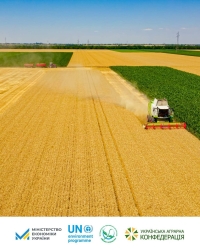
If you look at recent analytics, you will see a severe labor shortage across all segments of agriculture and all qualification levels. What should we do — stop production? Certainly not. We must train young people to use digital tools and implement them widely. Look at our farmers: the sowing campaign is ongoing even in frontline regions such as Sumy, Zaporizhzhia, and Odesa. Ukrainian farmers demonstrate through their actions that even in the most difficult and extreme conditions, it is possible — and necessary — to move forward and shape the future.
IC UAC according to The Ukrainian Radio (broadcast from 17:20)
- 705 reads
News
09.10.2026 19:12
02.10.2026 23:51
29.09.2026 08:43
18.09.2026 10:33
10.09.2026 15:22
31.08.2026 12:45
17.08.2026 18:13
10.08.2026 13:13
09.08.2026 15:55
05.08.2026 11:00