News
14.07.2026 11:14
Ukraine could deprive Russia of the ability to export grain from occupied territories
14.07.2026 11:14
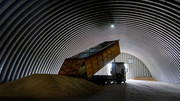
Restrictions on shipping in the Sea of Azov could significantly complicate grain exports from the temporarily occupied territories of southern Ukraine. According to Oleksandr Kovalenko, military and political analyst at the Information Resistance group, the Sea of Azov is gradually losing its role as a secure logistics route, creating growing risks for agricultural exports through the ports of Mariupol and Berdiansk, while strikes on Crimea are also calling into question the use of Crimean ports for exports.
- Read more
- 101 reads
05.07.2026 11:51
Pavlo Koval: Europe Is Shaping a New Agricultural Model, and Ukraine Must Be an Active Participant
05.07.2026 11:51

Pavlo Koval, Director General of the Ukrainian Agribusiness Club (UAC), spoke on Ukrainian Radio about Europe's largest Field Days near Magdeburg, the emergence of a new technological model for European agriculture, the future transformation of the EU's Common Agricultural Policy (CAP), and Ukraine's role in this process.
— You recently attended the Field Days in Germany. What made this event particularly significant?
These are the largest agricultural field demonstrations in Europe, held every two years, alternating between eastern and western Germany. This year's event took place near Magdeburg. For me, it was an opportunity to see firsthand how Europe is building a new model of agricultural production.
- Read more
- 271 reads
29.06.2026 14:52
Beyond Farm Support: How the New CAP Architecture Is Redefining European Agriculture and Ukraine's Role
29.06.2026 14:52

The European Union’s Common Agricultural Policy is entering a period of structural change. It is no longer only about farm income, market regulation or rural development. The emerging CAP is becoming part of a broader European agenda: food security, strategic autonomy, technological competitiveness, resource efficiency and economic resilience.
- Read more
- 195 reads
29.06.2026 08:30
Pavlo Koval: Food Security Has Become an Integral Part of National and Global Security
29.06.2026 08:30

The war in Ukraine, the escalating conflict in the Middle East, and accelerating climate change are increasingly affecting global food security. Today's challenges demonstrate that the stability of the global food market depends not only on agricultural production but also on resilient logistics, reliable critical infrastructure, and effective international cooperation.
This was emphasized by Pavlo Koval, Director General of the Ukrainian Agrarian Confederation (UAC), commenting to GlobalWatch on the growing risks facing the global agricultural sector.
According to Koval, Russia's full-scale invasion of Ukraine marked a turning point for the global food supply system. The blockade of Ukraine's Black Sea ports in 2022 exposed the vulnerability of international food supply chains. The simultaneous surge in grain, energy, fertilizer, and transportation costs quickly affected markets across Europe, the Middle East, Africa, and Asia.
- Read more
- 234 reads
23.06.2026 22:10
Ukrainian Intelligence: Russia creating conditions for anthrax spread in Kherson region by disposing of infected animal carcasses
23.06.2026 22:10

Defence Intelligence of Ukraine claims that Russian occupation authorities are creating conditions that could facilitate the spread of anthrax in the occupied part of Kherson region by transporting and burying infected animal carcasses.
According to DI, infected animals are being disposed of in violation of sanitary regulations. Instead of being incinerated, the carcasses are buried. Some of the burial sites are located near populated areas and highways, while others are situated less than one kilometer from residential settlements.
- Read more
- 213 reads
19.06.2026 19:23
Black Sea region to drive growth in global sunflower seed production
19.06.2026 19:23

According to preliminary estimates by Oil World, global sunflower seed production in the 2026/27 marketing year could rise to 63.3 million tonnes, compared with 57.5 million tonnes in the previous season and an average of 56.2 million tonnes over the past five years. As a result, the market is moving closer to historic highs, driven by expansion in key producing countries.
- Read more
- 177 reads
15.06.2026 15:18
New corn gene has been discovered in China that could reduce the country’s dependence on soybean imports
15.06.2026 15:18

Chinese scientists have discovered a gene in wild corn responsible for increased grain protein content, which was lost during the domestication of the crop. According to the researchers, this discovery could help reduce China’s dependence on imported feed protein components, Yicai Global reports.
- Read more
- 193 reads
08.06.2026 15:21
Hot weather hurts Asian crops as powerful El Nino takes shape
08.06.2026 15:21

Dry weather is disrupting crop planting across Asia, raising concerns about food supplies in the world's most populous region, and an expected severe El Nino weather pattern could inflict more damage.
From India's grain-producing northwestern plains to Australia's eastern wheat belt, and from Thailand's rice fields to Indonesia's vast palm oil plantations, hot weather and below-normal rains are hurting crops and forcing farmers to reduce planting, farmers, analysts and traders said.
- Read more
- 253 reads
04.06.2026 12:51
WHO IS SHAPING THE AGRICULTURAL ECONOMY OF 2030
04.06.2026 12:51
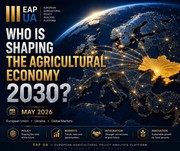
The developments of spring 2026 confirmed one of the central trends in global agricultural policy: leading economies increasingly view agriculture not only as a production sector, but also as a component of economic resilience, food security and strategic autonomy.
Global agricultural markets are entering a period in which competitiveness will be determined not only by production volumes or price, but also by the ability of states and companies to control supply chains, manage risks and ensure quality, traceability and export stability.
- Read more
- 390 reads
28.05.2026 10:17
Grain reserves in Ukraine are a third higher than last year
28.05.2026 10:17
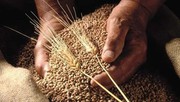
Stocks of grain and leguminous crops in Ukraine as of May 1, 2026 amounted to 12.7 million tons, which is 4.8 million tons more than the indicator on the same date a year earlier, according to data from the State Statistics Service.
It is noted that by the reporting date, 8.1 million tons of grain and leguminous crops were stored in agricultural enterprises, which is 52.8% more than the indicator on the same date a year earlier, and 4.6 million tons (+74.5%) were stored in processing and storage enterprises.
- Read more
- 233 reads
News
14.07.2026 11:14
05.07.2026 11:51
29.06.2026 14:52
29.06.2026 08:30
23.06.2026 22:10
19.06.2026 19:23
15.06.2026 15:18
08.06.2026 15:21
04.06.2026 12:51
28.05.2026 10:17