News From Agro-Industrial Complex
26.03.2026 14:45
China officially opens its market to Ukrainian peas, with exports currently approved for two companies
26.03.2026 14:45
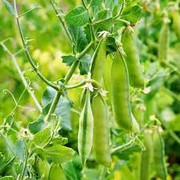
China has opened its market to Ukrainian peas following an audit, Ukraine’s State Service on Food Safety and Consumer Protection reported.
The Chinese side inspected the operating conditions of Ukrainian enterprises as well as their laboratory control capabilities. Based on the results, Ukraine received official authorization to export peas to China.
- Read more
- 360 reads
11.03.2026 11:18
Ukraine remains largest exporter of sunflower oil to Europe, with minor shares held by two other countries
11.03.2026 11:18
Ukraine has maintained its position as the largest supplier of sunflower oil to the European Union, according to data from the European Commission cited by the Union for the Promotion of Oil and Protein Plants (UFOP) in Germany.
From July 1, 2025 to February 1, 2026, EU countries imported just under 1.04 million tons of sunflower oil, compared with 1.28 million tons during the same period a year earlier, according to a report released on February 12. Of that volume, Ukraine supplied 950,000 tons of sunflower oil to the EU.
- Read more
- 928 reads
23.02.2026 22:23
Russian forces strike chocolate factory in Sumy region already damaged in 2022
23.02.2026 22:23

Russian troops launched a missile attack on the Mondelēz chocolate factory in Trostianets, Sumy region. The ballistic missile hit one of the plant’s production buildings, Foreign Minister Andrii Sybiha reported.
“Russia has struck another American business in Ukraine — the civilian manufacturing facility of Mondelēz in Trostianets, one of the first major U.S. investments in Ukraine’s independent economy,” the statement said.
According to preliminary information, there were no casualties.
- Read more
- 375 reads
09.02.2026 15:27
Grain exports from Ukraine slowed by 30% in the first half of the season — FAS USDA
09.02.2026 15:27

In the first half of the MY 2025/26 (July–December 2025), Ukraine exported 7.8 million tons of wheat and 1.3 million tons of barley, according to data from the State Customs Service of Ukraine. At the same time, the average rate of grain exports was 30% lower than in the same period of the 2024/25 marketing year, according to the FAS USDA report.
- Read more
- 807 reads
04.02.2026 08:40
Ukraine’s sugar production season 2025/26 ends nearly in line with last year thanks to record beet yields
04.02.2026 08:40
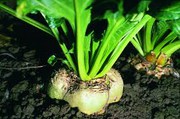
Ukraine’s beet sugar production season ended on February 1, 2026. A total of 26 sugar plants belonging to the Ukrsugar association produced 1.64 mln tons of sugar.
Including one additional plant that is not a member of the association, total sugar output in the country reached 1.72 mln tons.
Despite a reduction in sugar beet planting areas by 50,000 ha (–23% year-on-year), sugar production declined by only 4%, or 80,000 tons.
- Read more
- 948 reads
26.01.2026 16:56
Ukraine increased fertilizer imports to almost 3.3 mln tons
26.01.2026 16:56

Ukraine imported 3.285 million tons of fertilizers in 2025, which is 13% more than a year earlier.
“Growth occurred in almost all types of fertilizers, but the supply of nitrogen fertilizers increased significantly,” analysts note.
And they add that the market has significant transitional reserves of fertilizers in certain very important groups.
- Read more
- 632 reads
23.01.2026 09:17
Wheat yield plateau linked to farming practices rather than climate — scientists
23.01.2026 09:17
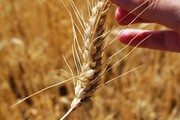
Scientists have found that the wheat yield plateau in northwestern Europe is driven primarily by agronomic management rather than climatic conditions. The findings come from a study by Wageningen University and Research, published in the scientific journal Nature Food.
- Read more
- 447 reads
12.01.2026 09:10
FAO presented a plan for the restoration of Ukraine’s agricultural sector for 2026–2028
12.01.2026 09:10

The Food and Agriculture Organization of the United Nations (FAO) has published a plan for emergency response and rapid recovery of Ukraine’s agricultural sector for 2026–2028.
The document identifies priority measures to protect rural income sources, restore production potential, and support the country’s agri-food sector.
Deputy Minister of Economy, Environment, and Agriculture Taras Vysotsky said that the war has seriously complicated the lives of Ukrainian farmers – from access to land and machinery to the ability to market their products. The agricultural sector remains critical for food security, employment, and economic stability.
- Read more
- 814 reads
10.01.2026 15:20
Oilseed processing in Ukraine has reached its peak in recent years due to export duties
10.01.2026 15:20

The introduction of export duties on soybeans and rapeseed has had a tangible effect: the utilization of processing capacities has increased to the maximum level in recent years. This is reported by the Ministry of Economy and Agriculture of Ukraine.
“In terms of stimulating processing, the effect is there – and it is measurable. Capacity utilization has increased, oilseed processing is currently at the maximum level in recent years. This indicates that the market has reacted exactly as was laid down in the logic of the norm,” said Oleksiy Sobolev, Minister of Economy, Environment and Agriculture of Ukraine.
According to him, the Ministry of Economy is building a policy where crops grown in Ukraine are more profitable to process domestically than to export raw materials and only then export processed products. This approach is aimed at moving away from the model of a raw material economy.
- Read more
- 513 reads
10.01.2026 14:58
Prices for Ukrainian corn continue increasing
10.01.2026 14:58

Аn upward price trend is being observed this week on Ukraine’s feed corn market.
Prices continue to be supported by limited selling activity from farmers, strong demand from traders, and corresponding trends on the export market.
Under the influence of these factors, bid prices for feed corn have increased by UAH 100-400 per ton since the start of the new year and, as of January 9, are reported in the range of UAH 8,300-9,900 per ton CPT. At the same time, the highest prices remain typical for southern Ukraine.
- Read more
- 528 reads
News
17.08.2026 18:13
10.08.2026 13:13
09.08.2026 15:55
05.08.2026 11:00
27.07.2026 22:49
23.07.2026 19:42