Made by ElVisti
© Ukrainian Agrarian Confederation, 2006-2026.
All rights reserved.
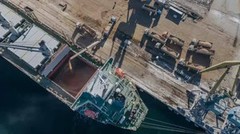
Ukraine is harvesting a decent grain crop, but selling it is becoming increasingly difficult due to Russian strikes on ports, railways, and other logistics routes. There is currently a high probability that the grain may remain in storage instead of generating funds for farmers for the next sowing campaign.
The farms most at risk are those without their own storage facilities and forced to sell their produce to intermediaries at reduced prices. What could be the scale of grain accumulation, and what consequences could this have for the 2027 harvest? The CEO of the Ukrainian Agrarian Confederation (UAC), Pavlo Koval, explained to UNN.
The 2026 grain harvest — how much Ukraine has already collected and what volumes need to be exportedAs of October 13, Ukrainian farmers had harvested 37.14 million tonnes of grain and leguminous crops, covering 65.2% of the planned area. According to Pavlo Koval's estimate, by October 15, up to 38 million tonnes had been collected from the fields. Separately, according to the Ministry of Agrarian Policy, about 13.9 million tonnes of oilseed crops had been harvested, including sunflower, rapeseed, and soybeans. It should be noted here that the previous state forecast projected a grain harvest of approximately 60.4 million tonnes.
Pavlo Koval explains that the discrepancy arose because of corn: its gross harvest may reach 30–31 million tonnes, but by mid-October only about 3.5 million tonnes had been harvested. Therefore, the final figures summarizing this year's grain harvest will emerge once farmers harvest this crop. And this is precisely where major problems begin.
"Due to the rain and high grain moisture, part of the harvest may remain in the fields until winter. Drying requires additional funds, which not every farm can afford," the expert warned.
Speaking about the wheat harvest, the UAC CEO estimated it at 26.2 million tonnes, of which approximately 12 million tonnes are planned for export. (For corn, the benchmark is 22 million tonnes of exports out of an expected production volume of 30 million tonnes.) However, these volumes represent export potential, because it is not enough to sell grain abroad — it must also be physically delivered to the buyer.
Maritime exports under threat — how much Ukrainian grain could remain in the country due to supply restrictionsAccording to the State Customs Service, as of October 16, since the beginning of the 2026/27 marketing year, Ukraine had exported 5.929 million tonnes of grain and leguminous crops. This is 24.9% less than during the corresponding period of the previous season.
Koval calculates that current shipments amount to approximately half of the required pace, given the size of the harvest. According to him, additional wheat stocks of 5–6 million tonnes could accumulate by the end of the season. If significant logistics restrictions persist during the period of mass corn deliveries, the risk of grain accumulation will increase sharply.
"The Danube route is of particular concern. In 2022, it made it possible to transport up to 2.5 million tonnes of cargo per month and partially offset restrictions on the operation of major seaports. Now it is being affected by strikes on terminals, infrastructure problems, and shipping disruptions. In the area of the Sulina Canal alone (the middle of the three major straits of the Danube Delta and the main navigable channel at the mouth of the Danube in Romania — ed.), about 150 grain vessels have accumulated," the expert said.
Rail crossings with the EU and road routes also cannot fully replace maritime transport: their capacity is limited, and transportation is more expensive. As a result, even when buyers are available, farmers cannot always ship their produce on time.
Will Ukraine have sufficient storage capacity for the harvest, and what will happen to the surplus?As of the end of 2025, Ukraine’s total grain storage capacity was estimated at 52.67 million tonnes of simultaneous storage. However, it is important to understand that some storage facilities are already occupied, some are located far from producers, and grain transportation and elevator services cost money. Therefore, under the most difficult scenario, according to a source speaking to UNN, if the current pace of exports and corn accumulation is maintained, carryover stocks could reach 30–35 million tonnes. As a result, the grain may have to wait for sale, while keeping it throughout this period will require the farmer to have storage space and financing.
"Having grain in the storage facility does not yet guarantee money in the account," Pavlo Koval emphasized.
According to him, small and medium-sized farms often have only three options:
Each of them entails its own costs and risks.
Additionally, excess supply within the country will put pressure on purchase prices. Even if grain becomes more expensive on the global market, Ukrainian producers will not necessarily benefit, as higher logistics costs and transportation risks may absorb the difference.
Export restrictions and farmers’ losses — how the grain crisis will affect sown areas and grain production in 2027Ukrainian farmers have already felt the consequences of the current difficulties during the autumn sowing campaign. In an exclusive comment to UNN , Pavlo Koval said that by mid-October, approximately 3.5 million hectares of winter wheat had been sown. If the area reaches 4 million hectares by the end of the campaign, he will consider that an acceptable result. The situation is worse with winter barley: according to the expert’s estimate, about 280,000 hectares have been sown, compared with approximately 500,000 hectares planned.
"Amid difficulties selling grain, producers may cut spending on fertilizers, crop protection products and technological operations, which will affect next year’s yields. Some farms will also revise their crop structure in favor of crops that have higher margins and require less logistics capacity," the UAC director general forecast.
Among such options, he named rapeseed and sunflower. However, according to him, changing the "cropping map" will not solve the problem of the destruction of export routes.
The situation is quite difficult. I do not want to say that it is catastrophic, but it is quite challenging
— the expert noted.He emphasized that the most vulnerable remain small producers without their own transport or financial reserves. For them, a delay in selling grain may result in lower profits and the risk of being unable to finance the next sowing campaign. Therefore, if export restrictions continue, the Ukrainian economy could suffer a double blow: lower foreign-currency revenues now and weaker grain-production potential in 2027.
IC UAC according to UNN [2]
© Ukrainian Agrarian Confederation, 2006-2026.
All rights reserved.
Links:
[1] https://agroconf.org/en/category/news-rubrics/news/uac-news
[2] https://unn.ua/en/news/ukraines-grain-trap-where-to-put-the-2026-harvest-and-what-prolonged-export-restrictions-could-lead-to