Made by ElVisti
© Ukrainian Agrarian Confederation, 2006-2026.
All rights reserved.
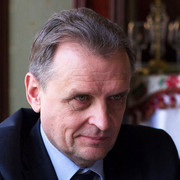
The President of the Ukrainian Agrarian Confederation, Leonid Kozachenko, in an interview with Ukrainian Radio, analyzed the key challenges faced by Ukrainian farmers during this year’s spring field campaign. He spoke about the impact of mined territories on overall harvest volumes, export difficulties caused by European quotas and border protests, and shared forecasts regarding food prices and domestic food security.
In the fifth year of the full-scale war, how well have Ukrainian farmers adapted? How much land remains uncultivated due to mines or proximity to the frontline, and under what conditions are farmers entering the new season?
Leonid Kozachenko: Out of the 34 million hectares of agricultural land that we actively used before, more than 5 million hectares are currently not cultivated at all. Some of these lands remain under occupation, some are mined or contaminated, and others are located directly in active combat zones. This has led to significant losses: before the full-scale invasion, we reached a historic record of 108 million tonnes of grains and oilseeds, while last year this figure dropped to 73 million tonnes — a decline of nearly 40 million tonnes.
However, despite these enormous losses, we are holding on. Ukraine remains firmly among the world’s top five exporters of these products, and nearly 60% of the country’s total exports come from agriculture. Our sector will continue to serve as a key stabilizer of the national economy.
Today, Ukrainian stores offer a lot of Polish products, often cheaper than domestic ones. How can Ukrainian producers compete under such conditions, especially given the unfriendly actions of Polish farmers at the borders?
Leonid Kozachenko: Relations with Poland in the agricultural sector are indeed very complicated at the moment, despite our gratitude for its military support. Polish farmers are blocking the transportation of our products not only to their domestic market but also in transit to other European and global markets. I personally participated in meetings with their government, and it is extremely difficult to persuade them.
Due to such policies by our neighbors and the European Union’s decision to return to quota-based trade, our agricultural exports to Europe have fallen threefold compared to 2023, when nearly 80% of our продукции was directed there. In addition, Romania has introduced strict licensing requirements. Because of these bureaucratic barriers, our largest sugar producers have been unable to export to that market for six months.
As for price competition within Ukraine, it is important to understand that European farmers receive substantial subsidies. Nearly 40% of the EU budget is allocated to agricultural support, and the Polish government previously also subsidized exports to Ukraine. Ukrainian farmers do not have access to such financial support, while their production costs continue to rise. As a result, many planned investments in domestic livestock and processing sectors have unfortunately been put on hold.
What are the key factors shaping this year’s spring sowing campaign? How critical are fuel and fertilizer prices?
Leonid Kozachenko: The shortage of mineral fertilizers and rising fuel prices are major challenges. Farmers’ costs have increased by 18–20%. Profitability in grain production is currently negative. Ammonium nitrate costs over UAH 30,000 per tonne, while urea exceeds UAH 40,000. We are short of approximately 300,000 tonnes of nitrogen fertilizers and more than 500,000 tonnes of compound fertilizers. Before the war, we produced nearly half of our domestic needs, but now domestic production has declined even further.
We are also affected by global developments: the escalation involving Iran and disruptions in the Red Sea are forcing vessels to reroute around Africa. This significantly increases logistics costs and puts additional pressure on our farmers. State support exists, but under current conditions, it is objectively insufficient.
Recently, there has been public concern about buckwheat prices and potential shortages. What should we expect on the domestic food market?
Leonid Kozachenko: There is absolutely no threat to domestic food security. The situation with buckwheat is quite logical: Ukraine has effectively popularized this crop worldwide, and global demand has increased. At the same time, due to the war, we have somewhat reduced production volumes. However, there is no need to panic. Farmers will sow buckwheat, and this temporary market imbalance will disappear.
Overall, the domestic market will be fully supplied with food — there will be no shortages. The only sensitive issue is price. Given all the challenges we have discussed (fertilizers, fuel, logistics), food prices may increase somewhat. However, experts agree that the rise will not exceed 15–20%. The agricultural sector is the backbone of our economy — it will endure, and we will overcome these challenges.
IC UAC according to The Ukrainian Radio [2]
© Ukrainian Agrarian Confederation, 2006-2026.
All rights reserved.
Links:
[1] https://agroconf.org/en/category/news-rubrics/news/uac-news
[2] https://ukr.radio/schedule/play-archive.html?periodItemID=4903978